How AI and Predictive Maintenance Are Transforming the Elevator Industry
Last monsoon our building lift stopped between the 4th and 5th floor. Forty minutes, give or take. My neighbour was inside with two bags of sabzi and in a very bad mood.
The technician came, opened a panel, said “sensor problem” and left. Nobody could tell us if it would happen again next week. That was the part that bugged me.
So I started reading, and I kept running into AI in elevator industry news. Honestly, I thought it was just marketing at first. Some of it is. Some of it isn’t.
Okay, so what is the AI actually doing
Not robots inside the shaft. Let me say that first.
A lift already produces a lot of small data. How many times the door opened, how long it took to close, motor temperature, vibration, the current it pulls, how often it stops at each floor. Most old lifts just throw all this away.
The new idea is to collect it and let software look for patterns. A human can’t sit and watch numbers all day. Software can.
So when people talk about the AI in elevator industry, this is mostly what they mean. Pattern spotting. Boring, but useful.
Predictive maintenance, plain version
Right now most buildings do one of two things. A monthly service visit, whether the lift needs it or not. Or wait till it breaks and then call someone.
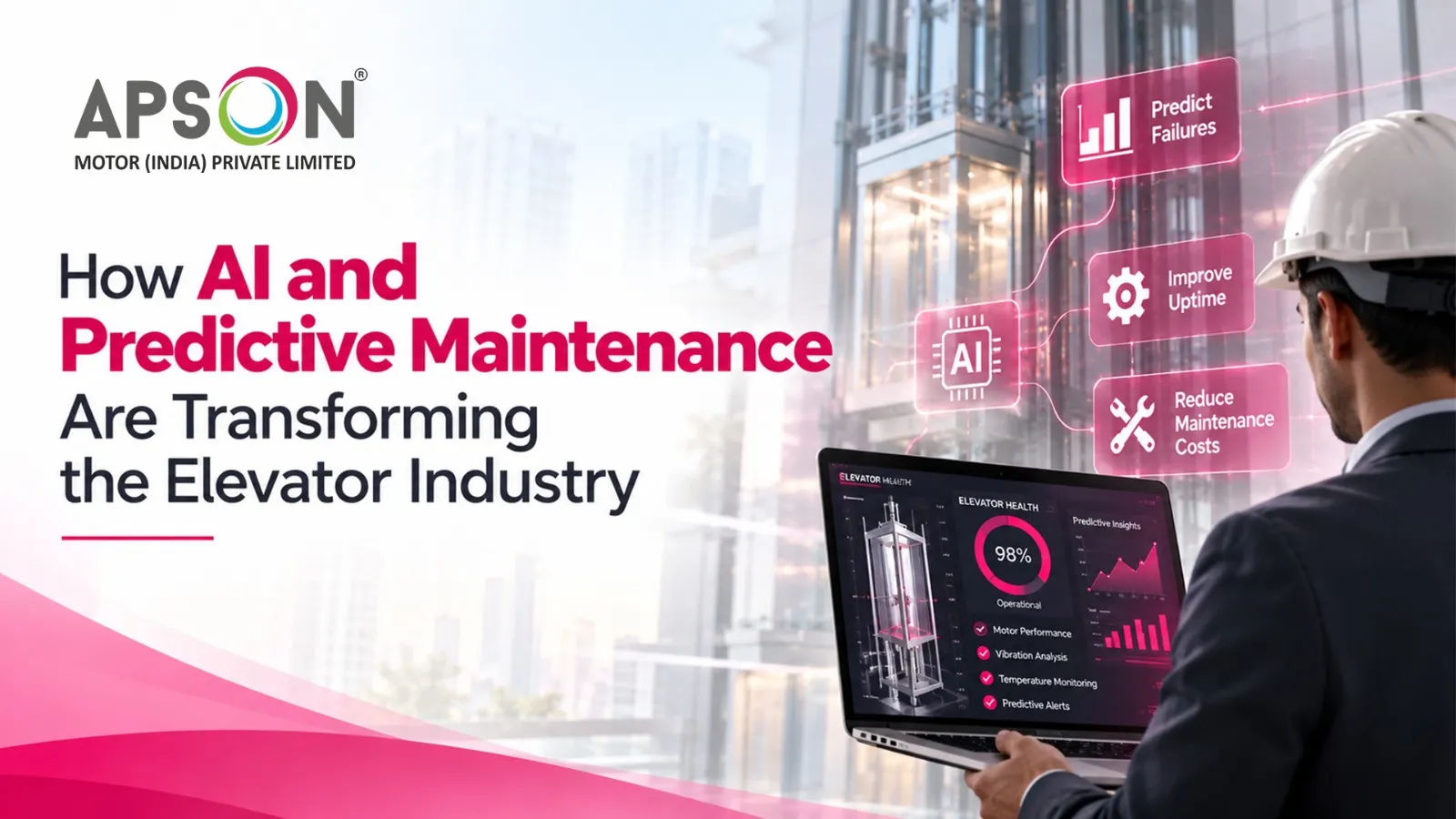
Predictive is the third way. The system notices that the door motor is taking longer than last month, or vibration is creeping up near one floor, and it flags it before anything stops.
Then someone fixes it on a normal Tuesday, not during Sunday dinner.
This kind of elevator maintenance technology isn’t magic, and it won’t catch everything. A rope can still surprise you. But for the slow, small faults it’s quite good. Door problems are the big one, I think. A lot of breakdowns start right there, at the door.
Lifts that think about traffic
Different thing, same family. Smart elevator systems can learn how a building moves. In an office tower the lifts get crowded at 9:30 and again around 6. A smart controller can send more cars down to the lobby in the morning and park a few at the busy floors.
Some use destination dispatch. You type your floor on a panel outside, and it tells you which lift to take. First time it feels strange. Then you realise you’re waiting less.
For a 5-floor apartment block, probably overkill. For a 30-floor commercial tower, it starts making sense.
Related : https://apson.co.in/chetak-journey
Someone watching from far away
A basic elevator monitoring system sits on the controller and sends alerts to a phone or a central dashboard. Lift stuck, door fault, power failure, overheating. The service team knows before the resident calls.
And in a trapped-passenger case, that matters a lot. Knowing which lift, which floor, for how long, without someone shouting through the door.
I’d say this is the most practical piece for societies. Less fancy than the AI talk, but you get a lot out of it.
Will it work here though
Good question. India isn’t a lab.
Voltage drops happen. Power cuts happen. Dust, humidity, salty coastal air, weak internet in basements. A system that works nicely in a showroom can behave differently in a Chennai society in July.
And the people. Many technicians are really skilled but learned on older panels. Now they have to read dashboards. That’s a training thing, and it takes time.
Cost too. Fitting sensors on an old lift is possible, but not free, and a small society committee will ask hard questions. Fair. They should.
Still, I think the AI in elevator industry story will reach us faster than we expect, mostly because bigger developers already want the data.
The machine underneath still matters
One thing I realised late. Data is only as good as the machine producing it. A smooth gearless machine with a good drive gives clean signals. A worn-out old one gives noisy signals, and the software gets confused.
So smart features don’t replace good hardware. They sit on top of it. Obvious maybe, but I missed it at first.
Power use is part of this too. Lifts sit idle a lot, especially at night. Software can put them into a low-power mode and wake them up when needed. Small saving each day, but buildings run lifts for years.
Not everything is great
Some honest worries.
Marketing is loud. Every brochure in the AI in elevator industry now says “AI-powered”, and half the time it means a simple alert on your phone. Ask what exactly it does. Ask for a demo.
Data is another one. Who owns the lift data? The builder, the society, the vendor? Nobody asks this and they should.
Then false alarms. If the system cries wolf every day, people stop reading the alerts. Then it’s worse than having nothing.
And a human still has to turn up. Software can say “check the door sensor”. It can’t tighten a bolt.
The future bit
Everyone loves predicting. I’ll try, loosely.
The future of smart elevator technology is probably less dramatic than the movies. Fewer surprise breakdowns, shorter waiting time, lower power use, service visits that happen when they’re needed. Maybe touchless buttons and voice control becoming normal, we already saw some of that after covid. Maybe lifts talking to fire alarms and building security.
And AI in elevator control will probably go quiet and invisible, like auto-focus in a phone camera. You won’t think about it. It’ll just work.
Or not. I could be wrong, honestly.
If I were buying today
Not a perfect checklist, just what I’d ask.
What data does the lift give out, and who can see it? Are the sensors built in, or an add-on later? Do alerts come to my phone or only to your office? And what happens if the internet goes down? The lift should still run safely, that’s non-negotiable.
Ask for a real example too, not a brochure. A building that has used it for a year.
And don’t fall for the AI in elevator industry hype just because it sounds modern. Good basic service beats a fancy dashboard any day.
Anyway
My neighbour’s lift got fixed, by the way. New door sensor. The thing is, the lift probably “knew” something was off weeks earlier, we just weren’t listening.
That’s the whole point of AI in elevator industry tech, I guess. Start listening.
FAQs
What is AI in elevator industry all about?
It means using software to read lift data, spot faults early and manage traffic better.
Is AI in elevator industry useful for small apartment buildings?
Basic monitoring helps even small buildings. Full smart features suit bigger buildings more.
What is predictive maintenance?
Fixing a part before it fails, based on data from the lift.
Can old lifts be upgraded?
Often yes, with add-on sensors, but check with your supplier first.
Will it replace lift technicians?
No. It only tells them what to check and when.
Visit Facebook : https://www.facebook.com/apsonmotors